







NewsDetails
Copper Castings: Properties, Applications and Manufacturing Process
author:ruifengsirens time:2026-08-21 18:03:41 click:185
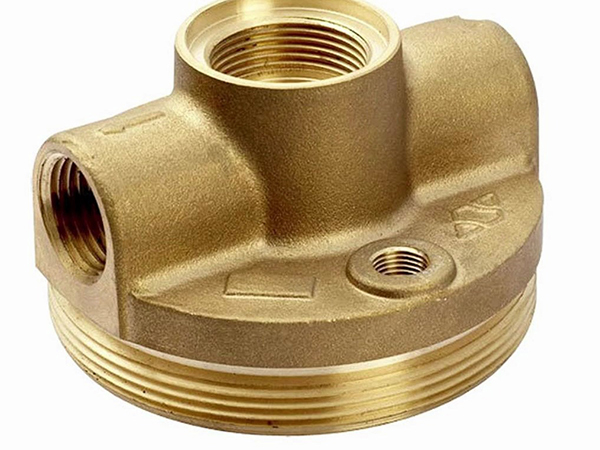
Copper Castings are widely used in industries where excellent electrical conductivity, thermal performance, corrosion resistance, and mechanical reliability are required. From electrical components and marine equipment to valves, pumps, and industrial machinery, copper-based cast components provide long-term performance in demanding environments.
Unlike simple metal forming processes, copper casting requires precise control of alloy composition, melting conditions, mold design, and solidification behavior. A professional casting manufacturer must combine metallurgical knowledge with strict quality control to produce reliable Copper Castings for critical applications.
What Are Copper Castings?
Copper Castings are metal components produced by pouring molten copper or copper alloys into specially designed molds and allowing the material to solidify into a required shape.
The casting process allows manufacturers to create complex geometries that may be difficult or expensive to achieve through machining or forging. Depending on the application requirements, different copper alloys such as bronze, brass, aluminum bronze, and copper-nickel alloys can be selected to achieve specific performance characteristics.
Because copper has high thermal conductivity and reacts easily with oxygen during melting, the casting process requires careful control of temperature, chemical composition, and melt treatment.
Key Properties of Copper Castings
The popularity of Copper Castings comes from their unique combination of physical, mechanical, and chemical properties.
Excellent Electrical Conductivity
Copper is one of the best electrical conducting metals available. This makes copper cast components suitable for electrical equipment, power systems, connectors, and industrial electrical applications.
For applications where stable current transmission is required, copper alloys provide reliable conductivity while maintaining structural strength.
Superior Thermal Conductivity
Copper Castings efficiently transfer heat, making them valuable in heat exchangers, cooling systems, power equipment, and thermal management applications.
The ability to quickly dissipate heat helps improve equipment efficiency and extend service life.
Strong Corrosion Resistance
Many copper alloys provide excellent resistance against corrosion, especially in marine and chemical environments.
Materials such as aluminum bronze and copper-nickel alloys are commonly selected for applications exposed to seawater, moisture, and aggressive operating conditions.
Good Wear Resistance and Mechanical Strength
Copper alloy castings can achieve high strength, durability, and wear resistance through proper alloy selection and controlled manufacturing processes.
These characteristics make them suitable for bearings, gears, valves, pumps, and heavy industrial components.
Common Applications of Copper Castings
Electrical and Power Industry
Copper Castings play an important role in electrical systems due to their conductivity and reliability.
Typical applications include electrical connectors, switchgear components, grounding parts, and power transmission equipment where consistent electrical performance is essential.
Marine Engineering
Marine environments require materials with excellent corrosion resistance.
Copper alloy castings are widely used for ship components, marine valves, pumps, propellers, and seawater handling systems because they maintain performance under harsh conditions.
Industrial Valves and Pumps
Many industrial flow-control systems rely on copper alloy cast components.
Valve bodies, pump housings, and mechanical parts benefit from copper alloys’ combination of strength, machinability, and resistance to corrosion.
Construction and Architectural Applications
Copper cast components are also used in architectural hardware, decorative structures, and specialized building applications where appearance and durability are important.
Main Manufacturing Process of Copper Castings
Alloy Selection and Material Preparation
The first step in producing quality Copper Castings is selecting the correct alloy according to the final application.
Engineers consider factors such as strength requirements, corrosion resistance, conductivity, operating temperature, and machining needs before choosing the material composition.
Melting and Melt Treatment
Copper alloys are melted using controlled furnace systems. During melting, manufacturers must manage oxidation, impurities, and gas absorption.
Professional foundries often apply processes such as degassing, refining, filtration, and chemical adjustment to improve melt quality before pouring.
Mold Design and Casting Method
The mold design directly influences the final quality of the casting.
Common copper casting methods include sand casting, permanent mold casting, investment casting, centrifugal casting, and continuous casting.
The selected process depends on component size, production volume, dimensional accuracy, and surface requirements.
Pouring and Solidification Control
During pouring, temperature control and filling speed are critical factors.
Controlled solidification helps minimize defects such as shrinkage cavities, porosity, and uneven microstructure. Cooling rate also influences mechanical properties and final product performance.
Inspection and Quality Testing
Reliable Copper Castings require strict inspection procedures before delivery.
Manufacturers commonly perform dimensional inspection, chemical composition analysis, mechanical testing, conductivity testing, and non-destructive testing to ensure products meet customer specifications.
How to Choose a Reliable Copper Casting Manufacturer
Selecting the right supplier is essential for industrial projects requiring consistent quality.
A professional copper casting manufacturer should provide:
Advanced melting and casting equipment
Experienced metallurgical engineers
Strict quality control procedures
Customized alloy and design solutions
Complete inspection documentation
Working with an experienced manufacturer reduces production risks and ensures stable performance in real-world applications.
Conclusion: Reliable Copper Castings for Modern Industry
Copper Castings continue to be an important solution for industries requiring conductivity, corrosion resistance, thermal efficiency, and mechanical reliability.
From electrical systems to marine engineering and industrial equipment, high-quality Copper Castings provide dependable performance under challenging operating conditions.
By combining advanced casting technology, precise process control, and professional quality management, manufacturers can deliver copper components that meet demanding global engineering standards.
References
Viswanathan, S., Apelian, D., Donahue, R., et al.“Casting of Copper and Copper Alloys.”ASM Handbook, Volume 15: Casting, ASM International, 2008, pp. 1026–1048.DOI: 10.31399/asm.hb.v15.a0005303
Stucky, M.“Relationship Between Metallurgy, Process and Properties of Cast Copper Alloys.”Wiley-VCH, 2006.DOI: 10.1002/9783527610327.ch7
Cohen, A.“Properties of Cast Copper Alloys.”ASM Handbook: Properties and Selection: Nonferrous Alloys and Special-Purpose Materials, Volume 2.ASM International.DOI: 10.31399/asm.hb.v02.a0001069
Davis, J.R.“Copper Alloy Castings.”Metals Handbook Desk Edition, ASM International.DOI: 10.31399/asm.hb.mhde2.a0003134
Wang, Y., et al.“Microstructure and Mechanical Properties of High-Pressure Die Cast Pure Copper.”Journal of Materials Processing Technology, Volume 275, 2020.DOI: 10.1016/j.jmatprotec.2019.116377
 Recommended Products


 Contact Us
—— Hotline:+86 18920038906
—— Email:ruifeng8906@gmail.com
—— Whatsapp:+8618920038906
—— Address:Liusi, Haocun Town, Botou City, Hebei Province, P.R.China